Sleep isn't a luxury, and it isn't a reward for finally getting everything done. It's the quiet, unglamorous work our bodies and brains do to keep us well, at every single age. After a lifetime of poor sleep and a recent diagnosis that stopped me in my tracks, I went looking for the why. Here's a gentle look at why sleep matters so much for babies, kids, teenagers and tired mums, and a nudge to get yourself checked if something feels off.
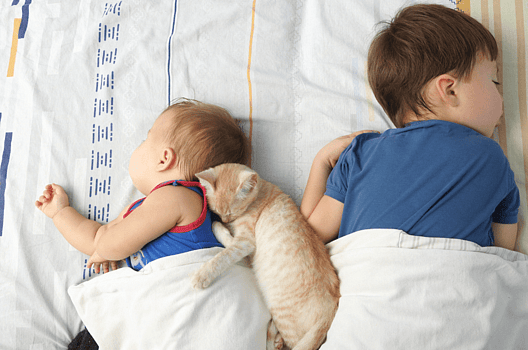
Last month I finally got the results I had been waiting two and a half years for. Severe Obstructive Sleep Apnoea. On an average night I stop breathing around 33 times every hour, and my oxygen levels drop as low as 73 percent.
I took a few days to process that. Then, because it's how I'm wired, I started reading. And what I found is that sleep matters far more, at every age, than most of us ever realise. So this is a gentle guide to why. No guilt, I promise. Just the science, my own story, and a bit of encouragement to look after yourself along the way.
My own wake-up call
I have never been a good sleeper. Not as a tired mum, not as a young woman, not even as a small child. Sleep and I have just never been good friends.
Then, about two and a half years ago, Luke recorded me while I was asleep beside him. On that recording I stop breathing for more than twenty seconds. He sat there watching, absolutely freaking out, and eventually poked me hard enough to rouse me, which was what got me breathing again.
So I want to be honest with you here, because this isn't a story about not realising something was wrong. I knew. I took that recording straight to my doctor, she took it seriously, and she sent a letter off to the sleep clinic.
And then I waited. Two and a half years on the waiting list.
A few months ago an acknowledgement letter finally landed. Then came a phone call asking whether I still needed help. (Because sleep apnoea clears up on its own, apparently. It does not.) Then, over the July school holidays, the sleep study itself. And last month, the results.
In between all of that, life just carried on, and I got quietly more and more exhausted. Foggy. Flat. Waking up feeling like I'd run a marathon in my sleep.Daily headaches. And I did what I suspect a lot of us do while we're waiting: I explained it away. Hormones. My age. Bad habits. Being a busy working mum with a full house. It's easier to blame yourself than to sit with "there's something wrong and I can't do anything about it yet." Meanwhile it was seeping into everything, my energy, my patience, my memory, my work, all of it.
There is such relief in finally having a name for it. It was never a failing of mine, and it was never something I should have been able to push through. It had a cause. And now that it has a name, it can be treated. A few weeks ago I headed up to Waikato to be set up with a CPAP machine and shown how to use it, and they told me the improvement can be almost immediate. That's the silver lining, and while I didn’t find it to be quite that easy, I’m now waking without headaches - that alone is a huge relief.
Why sleep matters so much
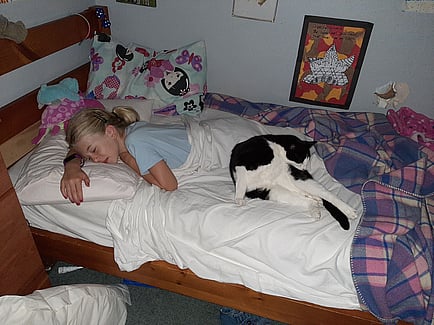
We tend to treat sleep as the thing we trim when life gets busy. The first thing to go. But sleep isn't downtime. It's some of the most important work your body does all day.
While you sleep, your brain sorts and files everything you took in that day, moving it from short-term memory into long-term storage. This is called memory consolidation, and it's a big part of why a good night's sleep helps things actually stick.
Sleep also does the housekeeping. Researchers led by Dr Maiken Nedergaard discovered a waste-clearance network in the brain, nicknamed the glymphatic system, that becomes far more active while we sleep. Think of it as a night shift, quietly washing away the waste proteins that build up during a busy day. When we don't sleep well, that clean-up doesn't happen properly.
Then there's your mood. Sleep is where we process emotion, which is why everything feels manageable after a good night and completely overwhelming after a broken one. And your immune system, your heart, your blood sugar, your appetite, all of it leans on sleep to stay in balance. The sleep scientist Matthew Walker, who wrote Why We Sleep, puts it plainly: there isn't a single part of the body that isn't improved by sleep, or harmed when we go without it.
Babies and little ones: sleep and a growing brain
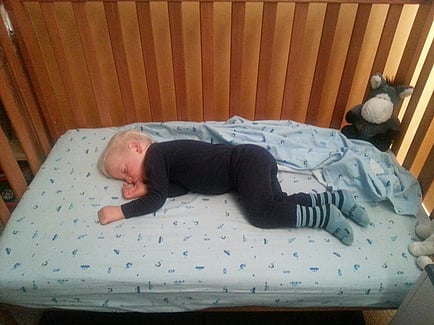
Little bodies do an astonishing amount of growing, and almost all of it happens while they sleep. Their brains are building connections at a pace they'll never match again, and sleep is when a lot of that wiring gets laid down.
The American Academy of Sleep Medicine recommends:
Babies 4 to 12 months: 12 to 16 hours a day (including naps)
Toddlers 1 to 2 years: 11 to 14 hours (including naps)
Preschoolers 3 to 5 years: 10 to 13 hours (including naps)
Now here's the bit I really need you to hear.
Some babies and little ones just don't sleep well. No matter what you do. No matter how many routines you try, how many books you read, how consistent you are. And when they don't sleep, you don't either.
If that's you right now, please hear this. It is not a reflection of your parenting. A wakeful baby is not a sign you've done something wrong. Some tamariki are simply wired to wake, and it is one of the hardest, most depleting seasons there is. You are not failing. You are exhausted, and those are two very different things.
School-age children: the quiet foundation of learning
Once the kids are at kura, sleep quietly becomes the thing that holds their whole day together. The AASM recommends 9 to 12 hours a night for children aged 6 to 12.
Because sleep is when everything they learned gets filed away, it's genuinely part of how they learn. A well-rested child finds it easier to concentrate, to remember, to manage big feelings and to bounce back when something goes wrong. A tired one struggles with all of it, and it often shows up as grumpiness or meltdowns rather than obvious sleepiness.
If your household runs on a tight school-morning schedule, protecting a decent bedtime is one of the kindest things you can do for their learning and their mood. I've written more about getting through the year without running yourselves into the ground in Surviving the NZ School Year.
Teenagers: the science behind the sleepy teen
If you've got teenagers, this next part changed how I parent mine.
Teenagers need far more sleep than we tend to give them credit for, 8 to 10 hours a night, according to both the AASM and our own KidsHealth NZ. Most aren't getting anywhere near it. One New Zealand study of around 9,000 high school students found roughly one in five were sleep deprived.
Here's what surprised me most. When a teenager can't get to sleep before 11pm and then can't drag themselves out of bed for school, that isn't laziness. It's biology. During adolescence the body clock genuinely shifts later. Melatonin, the hormone that makes us feel sleepy, starts being released a couple of hours later than it did in childhood. So your teen honestly isn't tired at 9pm, and then an early school start asks them to be up and functioning at the exact time their body still thinks it's the middle of the night. It's a bit like permanent jet lag, and it isn't their fault.
There's more going on up there, too. The teenage brain is still very much under construction. The prefrontal cortex, the part right behind the forehead that handles judgement, planning, weighing up risk and pausing before acting on impulse, is the last part of the brain to fully mature, and it keeps developing into the mid-twenties. That's not an excuse for everything, but it does explain a lot. And it matters even more when they're tired, because sleep deprivation hits exactly those skills first: judgement, self-control, and reading a situation clearly.
So where does that leave us as parents? Honestly, in the tricky middle. Our teenagers need to stretch their wings. They need room to be independent, to make their own choices, and yes, to get some of those choices wrong and learn from them. That's how they grow, and I have to remind myself of it often.
But they also have brains that aren't finished, that can't always make the right call, especially when they're running on empty. So I've landed on something like this. I let the small stuff be theirs. What they wear, how they spend their pocket money, which little mistakes only cost them a bit of pride or a late assignment. Those are theirs to learn from.
I step in for the big stuff. Safety. Wellbeing. Anything with a risk they can't take back. And sleep itself, because a phone at midnight is one of the biggest thieves of a teenager's rest. In our house the internet goes off at 9:30pm, for everyone, me included. It isn't about control. It's about giving their tired, still-developing brains the best possible shot at the sleep they genuinely need.
Mums and grown-ups: you can't pour from an empty cup
And then there's us.
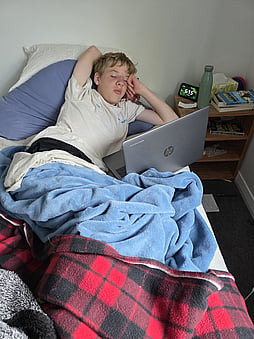
Most adults need 7 to 9 hours of sleep a night. I know. I can hear you laughing from here. For a lot of mums that number feels almost funny, because we are so often the most sleep-deprived person in the house and the least able to do anything about it.
We're the ones up in the night with a sick child. The ones lying awake at 2am running the mental to-do list, the appointments, the permission slips, the message we forgot to reply to. The load doesn't clock off just because the lights are out. (If that particular night-time spiral sounds familiar, I've written about it in Why We Worry About Things That Never Happen.)
But here's why it matters so much. Sleep is the foundation everything else is built on. It's where our patience comes from, our resilience, our ability to not burst into tears over a dropped bit of toast. When we're rested, we can handle the day. When we're not, every small thing feels like a mountain, and that isn't a character flaw, it's a sleep-deprived brain doing its best. Poor sleep is closely tied to low mood, anxiety and burnout.
Looking after your own sleep is not selfish. I'll say it again, because I need to hear it too. It is not selfish. You cannot pour from an empty cup, and a rested you is the very thing that lets you show up for everyone who needs you. If you've been running on fumes and calling it normal, this is your gentle permission to take your own rest seriously.
The wake-up call: when it's worth getting checked
Which brings me back to where I started.
If you've been tired for years, properly tired, the kind that sleep doesn't fix, and you keep explaining it away as hormones or stress or age or just being a busy mum, I want to gently plant a seed. It might be worth getting checked.
Here's something I wish I'd known sooner. Obstructive sleep apnoea is significantly under-diagnosed in women. Women often don't have the loud, obvious snoring people picture. Instead the symptoms show up as fatigue, low mood, brain fog, headaches and insomnia, exactly the things that get waved away as hormones, stress, menopause or "just being a tired mum". So many women spend years being told it's one of those, when there's a real, treatable cause underneath.
A sleep study is how it's diagnosed, and the test itself was far less of a hassle than I'd feared. It measures something called your AHI, the apnoea-hypopnoea index, which is the average number of times an hour your breathing stops or becomes very shallow. Broadly, an AHI of 5 to 15 is mild, 15 to 30 is moderate, and 30 or above is severe. Mine came back at 33.3, which sits in the severe range. The study also tracks your blood-oxygen levels, which should normally stay at or above about 90 percent overnight. Mine were dropping to 73.
The test wasn't the hard part. The waiting was. So if any of this sounds like you, my honest advice is to start the conversation with your GP sooner rather than later, because the queue can be long and the sooner you're in it the better. And if you're already on a list, stay on it. Keep following up. Don't let a "do you still need help?" phone call be the thing that quietly takes you off.
I'm not sharing this to frighten you. I'm sharing it because it took two and a half years from that first recording to get an answer, and I would hate for anyone to lose that kind of time by never starting. If something in your body feels off, please talk to your GP, and then keep at it until someone takes a proper look. Naming the problem is the first step to feeling better, and I can already tell you the relief of finally knowing is worth every bit of the fuss.
A quick note from me, friend: I'm a mum sharing my own experience and some general information I've read up on, not a medical professional. Nothing here is medical advice, so for anything that's worrying you, your GP is the right person to see.
Being kind to yourself, whatever your nights look like
So here's where I'll leave it. Protect your sleep where you can. Guard the kids' bedtimes, put the phones to bed in another room (or do what we do, and turn the internet off altogether), and go a little easier on yourself about the nights that fall apart anyway, because plenty of them will. And if something feels off, get it checked. You deserve to feel well.
One small thing that helps me is getting the mental load out of my head and onto a board, so my mind isn't still ticking through the week at 2am. It's a big part of why we design our Planning Panels. And if you'd like a gentle place to set the week down, my free Weekly Reset planner is a lovely spot to start. Sleep well, friend. You're doing better than you think.
Frequently Asked Questions
How much sleep does my child need by age? The American Academy of Sleep Medicine recommends 12 to 16 hours a day for babies 4 to 12 months, 11 to 14 hours for toddlers, 10 to 13 hours for preschoolers, 9 to 12 hours for children 6 to 12, and 8 to 10 hours for teenagers, all including any naps for the little ones. These are ranges, not targets to hit exactly, and there's natural variation from child to child.
Why do teenagers need more sleep and struggle to wake up early? Teenagers genuinely need 8 to 10 hours a night, but during adolescence their body clock shifts later, so melatonin (the sleepy hormone) is released a couple of hours later than in childhood. That means they honestly aren't tired early, and early school starts ask them to function when their body still thinks it's night. It's biology, not laziness.
Why is sleep so important for mums? Sleep is the foundation our patience, resilience and mood are built on, and poor sleep is closely linked to low mood, anxiety and burnout. Most adults need 7 to 9 hours, though mums are often the most sleep-deprived and least able to fix it easily. Looking after your own rest isn't selfish, it's what lets you show up for everyone else.
What are the signs I should get my sleep checked? Ongoing fatigue that sleep doesn't fix, brain fog, low mood, morning headaches, insomnia or waking unrefreshed are all worth paying attention to, especially if you've been blaming hormones, stress or age for years. In women these signs are often missed. If any of that sounds like you, it's worth a conversation with your GP, and if you're referred on, stay on the list and keep following up.
Is it normal for babies and toddlers to wake so much at night? Yes. Plenty of babies and toddlers wake often through the night, and for many little ones it has nothing to do with anything their parents are or aren't doing. Some tamariki are simply wired to wake. It is exhausting and completely valid to find it hard, and it is not a sign you're failing.
What is sleep apnoea and how is it diagnosed? Obstructive sleep apnoea is when the airway repeatedly narrows or collapses during sleep, so breathing stops or becomes very shallow and oxygen levels dip. It's diagnosed with a sleep study that measures your AHI (the number of these events per hour): roughly 5 to 15 is mild, 15 to 30 moderate, and 30 or above severe. It's common, under-diagnosed in women, and very treatable, so it's worth seeing your GP if you're concerned.