
A cyclone was coming, and our house was full of teenage boys for a sleepover. I lay awake half the night running through every "what if", and by morning I was exhausted, not from anything that happened, but from everything I'd imagined. The boys were fine. The cyclone passed. This is what I've been learning about overthinking, including a simple thoughts, emotions, actions, results cycle that finally helped it make sense.
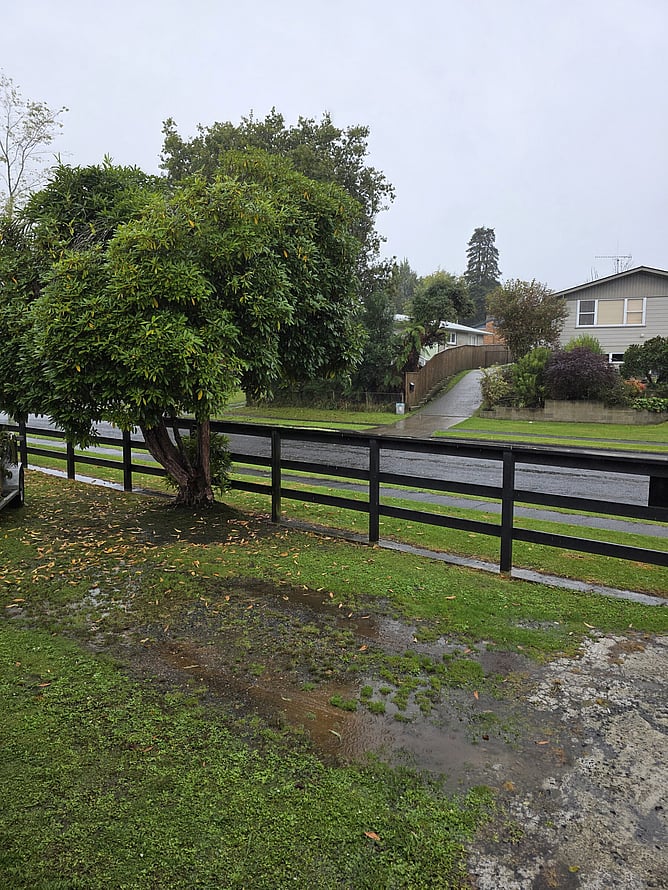
The cyclone was coming. And at the same time, we had a house full of teenage boys for a sleepover, which on its own already comes with a certain level of unpredictability. Add in heavy rain, strong winds, weather warnings, and the responsibility of having other people's kids in your home, and suddenly my brain had a lot to work with.
I thought about everything. What if the power goes out? What if something happens overnight? What if I need to contact someone's parents? What if I'm not prepared? I went to bed already on edge, and then I didn't really sleep. Not because anything was happening, but because my mind already was.
When your mind runs ahead of reality
There's a particular kind of tired that doesn't come from doing too much. It comes from thinking too much. Running through scenarios, planning outcomes, trying to stay one step ahead of problems that haven't even happened yet.
That was me that night. Not reacting to something real, but reacting to everything that could be. And the tricky part is that it feels productive. It feels like you're being responsible, prepared, on top of things. But underneath all of that, something quieter is going on: you're carrying the weight of situations that don't exist yet.
Living it twice
By the time anything actually happens (if it even does), you've already lived through it once in your head. The stress, the tension, the problem-solving, all of it before reality has had a chance to show up. And most of the time, it doesn't show up the way we imagined.
That night, the boys were fine. Loud at times, yes. At one point, around 2:30am, I did get up and gently remind them that sleep was still an option. But overall they entertained themselves, they stayed friends, and they figured it out. And the cyclone, for us, passed with barely any impact. No damage, no real disruption. Just a quiet sense of "oh... okay."
Why our brains do this
There's actually a reason our minds work this way. It's the part of us designed to protect, to help us prepare, to keep us one step ahead. In a genuinely dangerous moment, that's a gift. In everyday life, though, it often does something else: it pulls us into situations that haven't happened yet and may never happen at all.
What I find oddly comforting is that the research backs this up. Studies on how we predict our own future feelings show that we tend to overestimate both how bad a future event will be and how long the bad feeling will last. So while it feels like we're being helpful by rehearsing it all in advance, we're often just signing ourselves up to experience the stress twice.
The cycle we get stuck in
I did some training recently that finally gave a shape to something I'd felt for years but could never quite name. It's a simple cycle, and once you see it, you can't unsee it. Our thoughts create our emotions. Our emotions drive our actions. Our actions create our results. And then those results loop straight back and feed our next thoughts. Round and round it goes.
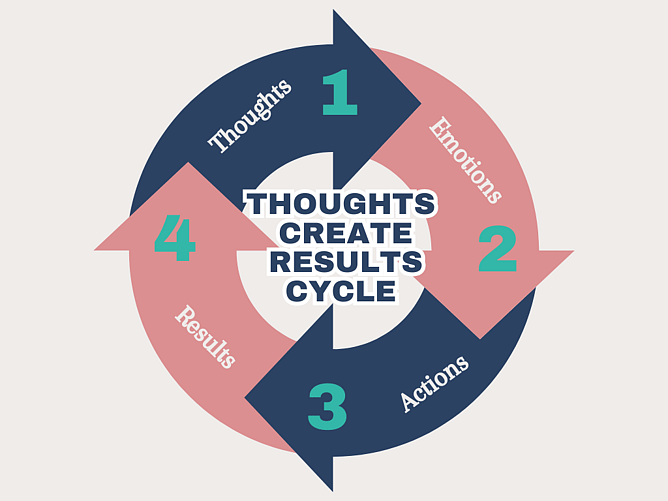
That night with the cyclone, I watched the whole thing play out without realising it. It started with a thought: what if the power goes out, what if I'm not prepared. That thought created an emotion, a low tension that settled in my chest and wouldn't budge. The emotion drove my actions: checking things again, running the scenarios, lying awake instead of sleeping. And the result, by morning, was exhaustion. Then here's the sneaky part. That tiredness fed straight back into my thinking, quietly telling me, "see, there really was something to worry about." The cycle had proved itself right, even though nothing had actually happened.
The reason it feels so convincing is that the body can't always tell the difference between an imagined stress and a real one. When you run a worst-case scene in enough detail, your body responds as though it's happening right now. You're not just thinking about it. You're feeling it, in your shoulders, in your stomach, in the way you can't quite get to sleep. No wonder it wears us out.
But there's real hope tucked inside that cycle, because it shows you where you can step in. You don't have to win an argument with your own thoughts, which is almost impossible at 2am anyway. You can change one part, gently, and it ripples through the rest. For me, the easiest place to break the loop is at the actions: putting the worry down somewhere outside my head, even just writing the "what ifs" on a list, instead of lying there rehearsing them.
The invisible layer of mental load
We usually talk about mental load in terms of what we do. The planning, the remembering, the organising. But there's another layer that's harder to see, and that's the anticipating. The "what if" thinking, the constant scanning ahead, trying to catch problems before they arrive.
When that layer gets too full, it gets harder to think clearly, make decisions, and stay calm. The American Psychological Association explains that ongoing stress can affect concentration, energy, and the ability to make decisions, which makes complete sense when you think about it. If your brain is constantly holding everything, it never really gets to rest.
Preparation versus overthinking
Preparation is genuinely useful. It keeps us safe and it helps us respond when things do go wrong. I'm not against being ready. But there's a point where preparation quietly tips into something else, where it stops being about getting ready and starts being about trying to control outcomes we were never going to control anyway. That's where the real energy drain happens.
A rough test I use now is to ask whether the thinking is actually helping me do something, or just spinning. If there's a useful action, I take it and then I try to let it go. If there isn't, that's usually my cue that I've crossed from preparing into the cycle, and it's time to step back.
Coming back to what's real
This is the part I'm still learning. Not how to stop caring, and not how to stop preparing, because both of those matter. But how to notice when my mind has moved too far ahead, and gently bring it back to what's actually happening right now. Because in that moment, on that night, everything was okay.
Naming the cycle has made that easier. When I catch the tight chest or the racing list, I can quietly recognise it for what it is, a thought that's kicked off a feeling, rather than proof that something is wrong. That little bit of distance is often all it takes to loosen the grip.
Where this connects to everyday life
This isn't really about cyclones or sleepovers. It's about ordinary life in a busy household. School schedules, work commitments, appointments, meals, all the things that need to be remembered by someone. When every bit of that lives in your head, it feeds the very same cycle: more thinking, more tension, more pressure.
That's why getting things out of your head and into one place matters so much. Not so you can plan for every possible outcome, but so you can stop carrying it all internally. For me that looks like a family planning board everyone can see, but it could just as easily be a simple routine or a written list. The point isn't the tool. It's that visible things stop taking up so much quiet mental space, and they break the loop at the actions, before it spins again. I wrote a bit more about that gentle shift in when did enough stop being enough, if it's the kind of thing you're sitting with too.
A gentle place to land
The boys were fine. The cyclone passed. And I was left more tired from worrying than from anything that actually happened, not because I'd done too much, but because I'd carried too much, too early. That's the part I'm paying more attention to now.
If you recognise yourself in any of this, the plans, the "what ifs", the constant thinking ahead, you don't have to fix it all at once. You just need one small place to step into the cycle. Sometimes the goal isn't to do more, it's to carry less. If you'd like a calm starting point, the free Weekly Reset planner is a soft place to begin getting things out of your head and onto the page.
Frequently Asked Questions
What is the thoughts, emotions, actions, results cycle?
It's a simple way of seeing how worry builds. A thought creates an emotion, that emotion drives what you do, and what you do creates a result, which then feeds straight back into your next thought. Understanding the cycle helps because it shows you that you can step in and change one part, usually your actions, rather than trying to argue your thoughts away.
How do I stop overthinking everything as a parent?
You probably won't stop the thoughts completely, and that's okay. What helps more is noticing when your mind has run ahead of what's actually happening, and gently bringing it back to right now. Getting the practical "what ifs" out of your head and onto a list or a visible planner also frees up the space they were quietly taking up.
Is overthinking part of mental load?
Yes, and it's one of the parts we talk about least. We tend to picture mental load as all the doing, but the anticipating, the constant scanning ahead for problems, is a heavy layer of its own. It can leave you tired even on days when not much actually happened.
Why do I worry about things that never end up happening?
Because the worrying part of your brain is trying to protect you by getting ahead of risk. It's well-meaning, it's just not very good at telling a real threat from an imagined one. Research suggests we also tend to overestimate how bad future events will be, so most of our worst-case scenes never play out the way we feared.
Is preparing for things the same as overthinking?
Not quite. Preparation is useful and it usually has a clear stopping point: you do the thing, then you rest. Overthinking is what happens after that, when you keep running scenarios you can't actually control. A good rough test is whether the thinking is helping you act, or just keeping you awake.