When money is tight, it is tempting to think you need a big budget overhaul before anything changes. You don't. These are real money-saving tips for families, the small, practical shifts that quietly helped our home stretch a bit further when the cost of living kept climbing. No strict rules. No perfection. No spreadsheet that takes over your life. Just a handful of things that worked for us, so you can pick the one or two that fit yours.
I was standing at the checkout the other week, watching the total tick up, doing that quiet maths in my head and wondering when on earth everything got so expensive. If you have ever done that same silent calculation, this is for you. We have a full house in Tokoroa, me, Luke, two teenagers who seem to eat constantly, and my Mum living with us, so the cost of living is something we feel every single week, and food is a big part of it. At some point I stopped waiting for the perfect plan and just started paying attention to the small things. None of it was dramatic. This is honestly just where we landed, and it helped, so I wanted to share it. If you want a few real money-saving tips for families for when the cost of living is high, start here.
First, see what is already going out
Before I tried to cut anything, I just looked. I sat down with a cup of tea and went through a few weeks of bank statements, line by line, no judgement, just looking at what was actually leaving the account.
The big bills you already know about. It is the quiet ones that surprised me. A couple of subscriptions we had genuinely forgotten we were paying for. A free trial that had quietly turned into a real payment. Little auto-payments I had set up once and never questioned since. None of them felt like much on their own, but together they added up to real money, every month, for things we were not even using.
I did not cancel everything in a panic. That is not the point. I just picked the one or two that we honestly did not need and let them go. It costs nothing to look, and once you have seen it, you cannot unsee it. If you do one thing from this whole post, make it this. Awareness is where it all starts.
Food that stretches further
Food is the one that really gets us, and the numbers back up the feeling. Food prices in New Zealand rose 4.5 percent in the year to February 2026, according to Stats NZ, with meat and vegetables among the biggest jumps. So if you have felt like your trolley costs more for less, you are not imagining it.
A few things have made a genuine difference for us. The first is a rough meal plan and a list before I shop. Nothing fancy, just five or six dinners stuck on the board and a list that matches, because I have learned that when I wander the supermarket without a plan, I spend more and still somehow come home with nothing for Tuesday. The list is the thing that quietly stops the impulse buys.
I also lean on the cheaper proteins more than I used to. Mince, eggs, and legumes go a long way, especially when you bulk a meal out with rice, pasta, or whatever veg is cheapest that week. Seasonal produce and frozen veg are your friends here, frozen is just as good in a stir-fry or a soup and it never goes slimy in the bottom of the fridge. I check the unit price on the shelf label rather than the big number, because the bigger pack is not always the better deal, and I am not shy about the store and own brands now. Half the time we cannot tell the difference.
Then there is cook once, eat twice. I double the recipe, and one pot becomes two nights, or dinner plus lunch the next day. It saves money and it saves my energy, which on a busy weeknight matters just as much.
And here is the one that genuinely changed how I think about food spending. The average New Zealand household throws away around $1,364 worth of food every year, according to Love Food Hate Waste NZ. That is not a small number. It is a whole grocery shop, several times over, going in the bin. So before I add anything to the list, I have started asking what we already have. Use up the wilting veg in a soup. Eat the leftovers before they turn. Shop the fridge first. It is not glamorous, but it is real money we were quietly throwing out.

Be a bit more intentional with fuel and travel
Fuel is another one that adds up faster than you notice, especially with teenagers and all the running around that comes with them.
We are a one-car family by choice now, and when we do drive, we try to use the smaller, more economical car. We combine trips so we are not making three separate runs into town in a day, and we carpool or take public transport where it makes sense. I want to be honest, this is a where we can thing, not an always thing. Some weeks life just does not allow it, and that is fine. The point is not to be perfect, it is to be a little more intentional than we were.
One small tool that helps is a fuel app like Gaspy, which is free and shows you the cheapest petrol near you in real time, shared by other drivers around the country. Keeping the tyres pumped up properly helps a little too. None of these are dramatic on their own, but the small ones stack up, the same as everything else in this post.
Review the big set-and-forget bills
Some of the biggest savings are not in the day-to-day at all. They are sitting in the bills you set up once and have not really looked at since. Insurance, mortgage, banking, power, broadband. The boring grown-up stuff.
Power is a brilliant place to start because there is a free, independent tool that does the comparing for you. Powerswitch, run by Consumer NZ, reckons the average household can save around $450 a year just by switching to a better-value plan. You pop in your address or upload a recent bill, it compares the providers for you, and that is it. It rarely pays to be loyal with power. It is worth doing the same with your broadband, ringing your provider once a year and simply asking if there is a better plan, because there often is and they do not exactly volunteer it.
For insurance and your mortgage, a broker is usually free to you, because they are paid by the provider, and they do the legwork of shopping around so you do not have to. And if all of this feels a bit overwhelming, the free guides at Sorted, run by Te Ara Ahunga Ora, are calm, plain-English, and genuinely helpful, with no one trying to sell you anything.
Use what you already have, and lean on your community
Before buying something new, I have started asking a quieter question first. Do we already have this, or something close enough?
There is usually a meal hiding in the pantry already. There is almost always something wearable in the wardrobe before anyone needs new clothes. Our library is free and full of books, and our local Buy Nothing and community groups online are full of people passing on things they no longer need. Op-shops, borrowing a tool instead of buying it, repairing instead of replacing, these are not new ideas, they are the things our parents and grandparents just did. There is something grounding about leaning on your community again, and your whānau, rather than buying your way out of every small problem.
The other thing that has helped is setting a little aside for costs I know are coming. A small amount tucked away each payday means the things you can see ahead, the school costs that seem to pile up every term, the car registration, Christmas, do not land as a nasty surprise, just a quiet thing already half handled. You do not need a fancy system. You just need to see it coming.

Why none of this is really about money
Here is the part underneath all of it. More than half of New Zealanders say they are struggling financially, and around 60 percent have felt financial stress in the past year, according to Te Ara Ahunga Ora. So if money has been sitting heavy on you lately, please know you are in good company. It is not a personal failing. It is a hard season, and a lot of us are in it together.
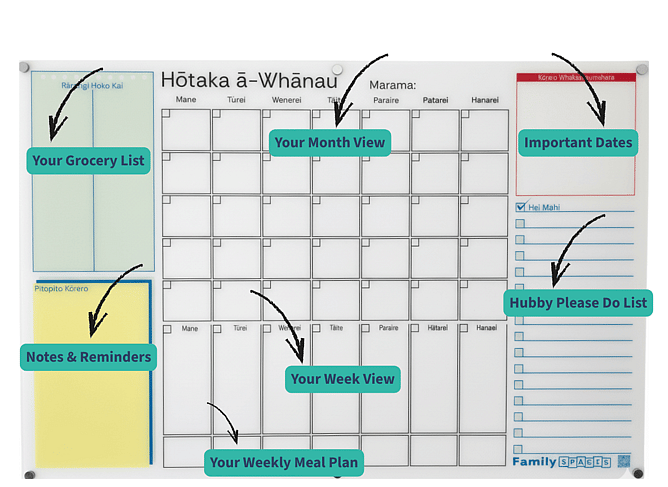
That is exactly why the thing that ties all of this together, for us, is making it visible. The biggest shift in our house was not any single saving. It was getting it all out of our heads and onto a board where the whole household could actually see it (I shared how we set ours up in our guide to family organiser boards). The bills, the subscriptions, the costs we knew were coming, written onto the month view where Luke, the kids, and Mum can all see what is ahead. When everyone can see it, it stops being one person's silent worry carried alone at the checkout. That is what eases the mental load, and that is the part I care about most. There is a companion post on the emotional side of all this, on coping when enough never quite feels like enough, and I would gently point you there too.

A gentle place to start
You do not have to do all of this. Please do not try to. That is the fastest way to feel worse, not better.
Pick the easiest one. Maybe it is just looking at your bank statement this week. Maybe it is meal planning five dinners, or running your address through Powerswitch while the jug boils. One small shift, done, beats a perfect plan you never start. Because budgeting was never meant to be about restriction or getting it exactly right. It is about awareness, and one small adjustment, and the quiet calm that comes from finally being able to see what is going on. Clarity creates calm. That has been true for us, again and again.
If you would like a soft, friendly place to begin, our free Weekly Reset planner is there whenever you are ready, no pressure, no perfection required. And if seeing it all in one place is the thing that would help most, that is exactly what our Planning Panels are made for. Start small. Be kind to yourself. That is honestly the whole secret.
Frequently Asked Questions
What is the easiest money-saving tip to start with?
Look at your last few bank statements before you try to cut anything. It costs nothing and you will almost always spot a forgotten subscription, a sneaky free trial that has turned into a real payment, or an auto-payment you no longer need. Awareness comes first, and cancelling even one or two unused things is an easy, quick win.
How can I save money on food without a strict budget?
Plan a rough five or six dinners and shop with a list, lean on cheaper proteins like mince, eggs, and legumes, and buy seasonal or frozen veg. Cook once and eat twice so one pot covers two meals. And use up what you already have before buying more, because the average New Zealand household throws out over $1,300 of food a year, so cutting waste is one of the simplest savings there is.
Does writing bills down somewhere visible actually help?
For us, yes, more than any single saving did. When subscriptions, bills, and upcoming costs are out of your head and onto a board the whole household can see, they stop being one person's silent worry. Everyone knows what is coming, surprises shrink, and the mental load eases. Clarity really does create calm.
Is it worth talking to a broker?
For things like insurance and your mortgage, a broker is usually free to you because the provider pays them, and they do the shopping around on your behalf. It is a low-effort way to check you are not overpaying on a big set-and-forget bill. You are not committing to anything just by asking.
How can I save money on power?
Use Powerswitch, the free independent comparison tool run by Consumer NZ. You enter your address or upload a recent bill, it compares the providers for you, and on average households can save around $450 a year by moving to a better-value plan. It rarely pays to stay loyal, so it is worth checking once a year.
How can I save on fuel without too much hassle?
Combine your trips so you are not making several runs into town in one day, use the smaller, more economical car if you have a choice, and carpool or take public transport where it suits. A free app like Gaspy shows you the cheapest petrol nearby, and keeping your tyres properly inflated helps a little too. None of it is dramatic on its own, but it adds up.