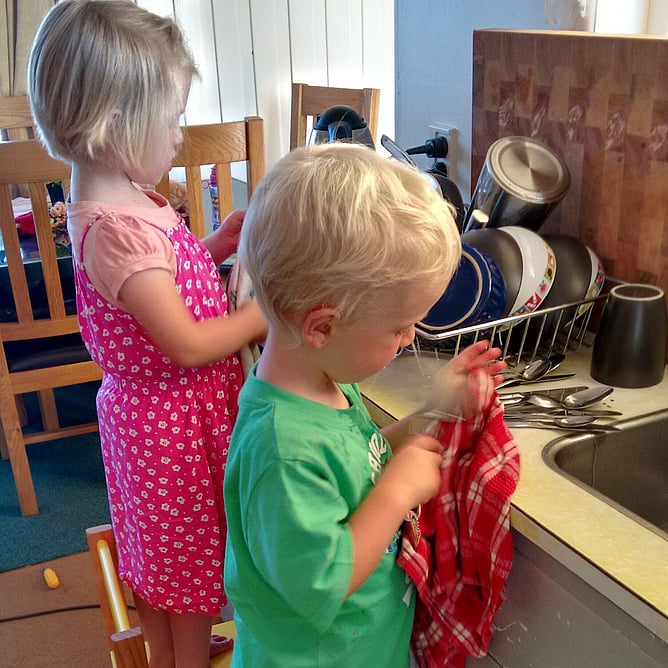
In our house, a 14 and 16 year old empty every bin, clean the bathrooms, cook a dinner a week and hand wash the pots at night. It didn't start as a parenting plan. It started because I got sick and couldn't hold everything on my own. This is the honest story of how our kids and chores landed where they are, the hard parts nobody photographs, and what the research actually says about children who contribute.
Here's a picture of raising kids who contribute that you won't see on Instagram. It's 9:30pm, I'm standing in the kitchen, and my 16 year old is only just starting the dishes. I want them done. I want the bench clear. I have to remind myself to breathe, because the job is going to get done, and it's hers to do. This is the real, unglamorous side of kids and chores. Not a colour-coded chart. Not smiling children with feather dusters. Just an ordinary family, in New Zealand, slowly learning to run a home together. And honestly, it's one of the things I'm most proud of.
How it started (it wasn't a parenting plan)
For years, I held every thread. When the kids were 4 and 2 years old, we moved from Auckland down to South Waikato so Luke could build his business. I went back to work as the main earner on an admin salary, and I held the rest: the cooking, the washing, the groceries, the meal planning, the budget, the bills, the birthdays, the baking, the school notices, the permission slips. All of it. Not because nobody cared, but because that's just how it had quietly become.
Back then the kids had barely any chores. Their own rooms, a bit of help with the dishes, and that was about it.
Then in early 2022, two big things happened close together. We finally got to build a home of our own, one big enough to bring my Mum in with us, three generations under one roof. And then I got cancer.
When everything changed
I'm nearly four years clear now, and I share that openly, because it's part of this story and I'm not ashamed of it. But at the time, it changed everything.
The kids were 12 and 10. Luke was flat out building the house, 60 plus hours a week, while the five of us squeezed into a small rental with Mum. And I could no longer do it all. There simply wasn't a version of me left over to hold every thread the way I always had.
So the kids stepped up. Not perfectly. Not without guidance. But they did it. A 12 year old and a 10 year old learned they were capable of far more than anyone had ever asked of them, because we finally asked.
Coming through it, I made a quiet decision: I didn't want to go back. I'd watched my children discover they were competent, that they could contribute, that the house runs because people show up and do the work. And they were people. Why would I take that away from them?
What their chores actually look like now
The kids are 14 and 16 now, and their chores have grown into something real. Not token jobs.
Actual, significant work that keeps a household of five (six, counting Mum) running.
My son, who's 14, unpacks the dishwasher every morning and cleans up after breakfast. Once a week he cleans the kids' bathroom, the guest toilet and the sink. He checks the rubbish and recycling daily, and on Saturday he empties every bin in the house, bedrooms, toilets, all of it, four toilets in total, and restocks the toilet rolls. All without being asked.
My daughter, who's 16, does the dishes every night, hand washing anything that doesn't fit the dishwasher. She vacuums the whole house once a week, plus a mid-week run through the living areas. On Saturday she wipes down the kitchen and cleans out the fridge. She cooks dinner once a week. And she bakes, because she loves it.
Both of them strip and remake their own beds weekly, and they're learning to wash their own clothes.
I want to be clear: none of this is punishment, and none of it is because the house is spotless. It isn't. It's because nobody in this family gets to be a passenger.

They chose their jobs (and I didn't assign by gender)
Here's the part I think matters most. They chose these chores.
We swapped things around and tried different combinations until it felt right. It turns out my son doesn't mind cleaning bathrooms and can't stand vacuuming. My daughter is the exact opposite. So the jobs landed by choice, not by decree, and definitely not by gender. My son cleans the toilets. My daughter runs the vacuum. That's just how it shook out when we let them own it.
That sense of ownership is the difference between a chore that gets resented and one that just becomes part of who you are. When a child picks the job, they're far more likely to actually do it, and to do it well.
The hardest part isn't starting. It's letting go.
If you'd asked me years ago, I'd have said the hard bit would be getting kids to start doing chores. It isn't. The hard bit is letting go of how and when.
We used to have Chore Day Saturday. Everyone did their jobs on a Saturday morning, sometimes after winter sport. Simple. But 16 doesn't always want to be told what to do or when. My daughter still does her chores, and she does them well, but in her own time. Which isn't always my time. The vacuuming might wait until Sunday. The dishes might not start until 9:30pm.
And that's my work now, not hers. Do I trust my nearly-adult to manage her own time, or do I insist on a clean kitchen by 8pm? Some nights I let it go. Some nights I remind her, gently but clearly, that she isn't the only one living in this house, and her timing affects the rest of us. Because learning to live alongside other people is one of the most important things she will ever learn.
The other lesson has been mine to swallow: they don't do things the way I would. Neither does Luke. The washing gets hung differently, folded differently. And I've had to sit with a simple truth. Different isn't wrong. It's just different. The job got done. That's what matters.
What the research actually says (and one myth worth clearing up)
I didn't need a study to tell me this was good for my kids. But when I went looking, the research was reassuring, and one popular claim turned out to be a bit of a mirage.
You've probably seen the line that a famous 80-year Harvard study proved chores predict success. I'd love it to be true, but it doesn't appear to hold up. Fact-checkers who've gone looking for the actual Harvard Grant Study data on chores keep hitting a wall of blog posts quoting other blog posts, with no primary source. So I won't repeat it as fact.
What is real is genuinely encouraging. The finding people are usually reaching for comes from Marty Rossmann at the University of Minnesota, whose long-running analysis found that helping around the house from age three or four was one of the best predictors of young adults doing well later, in their careers, their relationships and their independence. Interestingly, starting young mattered: children who didn't begin until they were 15 or 16 didn't get the same benefit.
There's newer work too. A large study of nearly 10,000 American children, published in the Journal of Developmental and Behavioral Pediatrics, found that kids who did chores in their first year of school were more likely, three years on, to feel capable at schoolwork, get on well with their peers, and feel satisfied with their lives, regardless of family income. And closer to home, researchers at La Trobe University in Melbourne found that children who regularly did chores, especially cooking, showed stronger working memory and better self-control, the ability to stop and think before acting.
None of that surprised me. When a child empties the bins or cooks a meal, they start to grasp what running a home actually takes. That's where the quiet gratitude comes from.
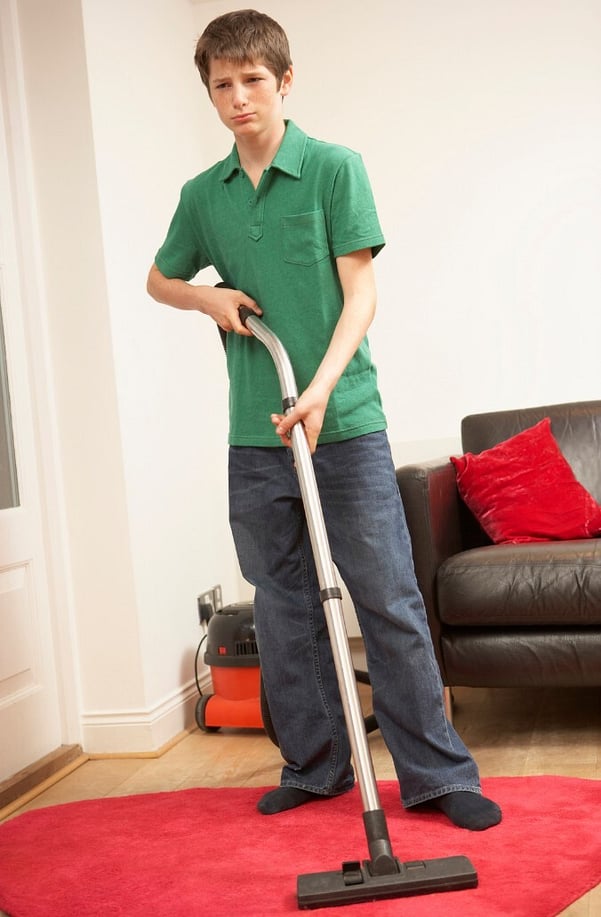
What it's really about
When I strip it all back, I'm not just teaching my kids to clean a bathroom or hand wash a pot. I'm teaching them that houses don't run by magic. That everyone who lives somewhere contributes. That effort has value. That showing up for the people around you matters.
My son is 14, my daughter 16. I'm very aware I don't have long left to teach them how to cook a proper meal, manage their money, and look after themselves and a home, before they walk out my door. When we finally moved into the new house, bigger, no more mad build hours, me well again, I told them the chores weren't going anywhere. They didn't argue. By then it was just how we did things.
More than anything, I want them to leave home knowing how deeply loved they are, and how capable they are. That's what the chores are really about. Not a clean house. Just two kids who know they can show up.
If your family is carrying too much on one set of shoulders, start small. Pick one real job, hand it over properly, and let them own it, even if it's not done your way or on your timing. If it helps to see the whole week in one place, my free Weekly Reset planner is a gentle way to get it out of your head and onto a board the whole family can see. It's the same thinking behind our Planning Panels, just a free place to start.
In part two, I'll get into the money side of this: pocket money, whether it should be tied to chores, and how it all connects to the invisible mental load of running a home. For more on this now, you might like our companion piece on raising responsible kids in Aotearoa.
Frequently Asked Questions
What are age-appropriate chores for teenagers?
By the teens, most kids can handle real, significant jobs: cooking a family dinner, cleaning a bathroom, vacuuming the whole house, doing dishes, emptying bins and washing their own clothes. In our home a 14 and 16 year old do all of these weekly. The goal is genuine contribution, not token tasks.
Should I assign chores based on my child's age or their preference?
Both. Match the difficulty to what they can realistically manage, but let them choose between jobs where you can. When my two picked their own chores, one happily took the bathrooms and the other took the vacuuming. Ownership is what makes a chore stick.
How do I get my teenager to do chores without constant nagging?
Hand the job over fully so it's genuinely theirs, then loosen your grip on how and when it gets done. A teen who owns a task will do it, just maybe on their timeline, not yours. Save your reminders for when their timing genuinely affects everyone else in the house.
Do chores really help kids succeed later in life?
The research is encouraging. Work from the University of Minnesota links helping at home from a young age with doing well as a young adult, and a large study in the Journal of Developmental and Behavioral Pediatrics tied early chores to better academic confidence, peer relationships and life satisfaction. (The famous "Harvard study" version of this claim, though, doesn't have a solid primary source, so treat it with care.)
At what age should kids start doing chores?
Earlier than most of us think. Little ones of three or four can help in small ways, and research suggests starting young matters more than starting big. That said, it's never too late to begin, even if, like us, your family only really got going in a crisis.
How do I stop redoing chores my kids didn't do "properly"?
This is the hardest part, and it's yours to work on, not theirs. Different isn't wrong, it's just different. If the bins are emptied and the dishes are clean, the job is done, even if the tea towel isn't folded your way. Redoing their work quietly teaches them their effort doesn't count.